
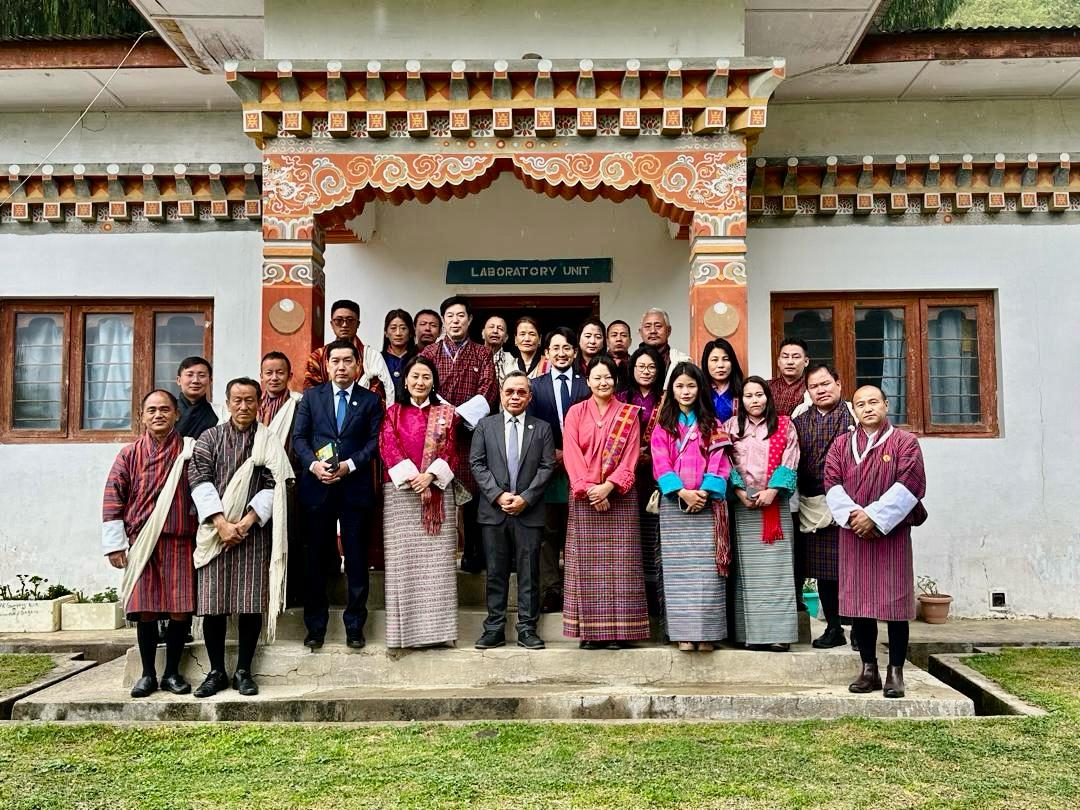
Dr Alue Dohong, FAO Assistant Director General and Regional Representative to the Asia and the Pacific along with , Mr. Kazuyuki Fujiwara, (Partnership and Resource Mobilization), FAO Regional Office for Asia and the Pacific and Mr. Ken Shimizu, FAO Representative for Bhutan and Nepal of the United Nations, visited the National Centre for Animal Health (NCAH) on 22 of May 2026, evincing a continued FAO’s strong partnership with Bhutan in the animal health sector. The visit was hosted by the Director General, Department of Livestock, MoAL, in collaboration with FAO country office Bhutan.
Welcoming the FAO, ADG and the team, Dr. Tashi Yangzome Dorji, Director General highlighted FAO’s longstanding partnership in strengthening Bhutan’s animal health systems, including support for disease surveillance, laboratory capacity, and emergency preparedness against major livestock diseases such as Foot and Mouth Disease, African Swine Fever, and Avian Influenza. The status of Bhutan’s ongoing effort on declaration of freedome from important diseases like dog mediated rabies, Brucellosis and PPR were also shared. She also emphasized the importance of the One Health approach and expressed gratitude for FAO’s continued technical expertise and collaboration, noting that the visit provides an opportunity to deepen cooperation and advance sustainable livestock development in the region.
Dr. NK Thapa, Animal Health Specialist briefed the delegates on the centre’s profile emphasizing it’s role as the apex institution for all the animal health mattersin the country. FAO’s longstanding support, particularly in strengthening Bhutan’s response to avian influenza, rabies control, and African Swine Fever (ASF) were acknowledge. The status on the current, Pandemic Fund Project activities executed by NCAH and FAO were also briefed.
The remarks from the ADG reflected the FAO’s continued commitment to supporting Bhutan’s efforts in safeguarding animal health, enhancing livelihoods, and ensuring a resilient livestock sector.The areas of interests for the animal health included as follows:
- Support to strengthen structural capacity of NCAH to evolve into a national and regional “Centre of Excellence” for animal disease diagnosis, laboratory services, biosafety, and animal health surveillance through technical cooperation and targeted assistance from FAO under the Technical Cooperation Programme (TCP). Support could include development of advanced diagnostic systems, laboratory quality assurance and accreditation mechanisms, modern laboratory infrastructure, digital disease intelligence systems, and institutional capacity enhancement to deliver accurate, timely, and precision-based diagnostic services.
- Support for human resource development capacity in Animal Health sector through specialized technical training, professional competency development, and establishment of a critical mass of expertise in animal health disciplines. Particular emphasis may be placed on strengthening capacities for NCAH staff in veterinary diagnostics, epidemiology, molecular biology, laboratory quality management systems, biosecurity, antimicrobial resistance, and emerging and transboundary animal diseases, thereby positioning NCAH as a highly competent and internationally credible reference laboratory.
- Strengthen national animal disease surveillance, early warning, preparedness, and rapid response systems to effectively address the increasing occurrence of animal disease outbreaks, particularly Transboundary Animal Diseases (TADs). FAO support could include establishment of integrated surveillance and reporting systems, risk-based disease monitoring, epidemiological analysis, emergency preparedness frameworks, field-laboratory coordination mechanisms, and adoption of modern diagnostic and data management technologies to enhance evidence-based decision-making and safeguard national livestock health and food security.
The program ended with the visit to the laboratory where the delegates were briefed on the existing diagnostic facilities and the equipment supports supported by FAO.
NCAH, Serbithang
391 total views, 6 views today

 1244 BFDA